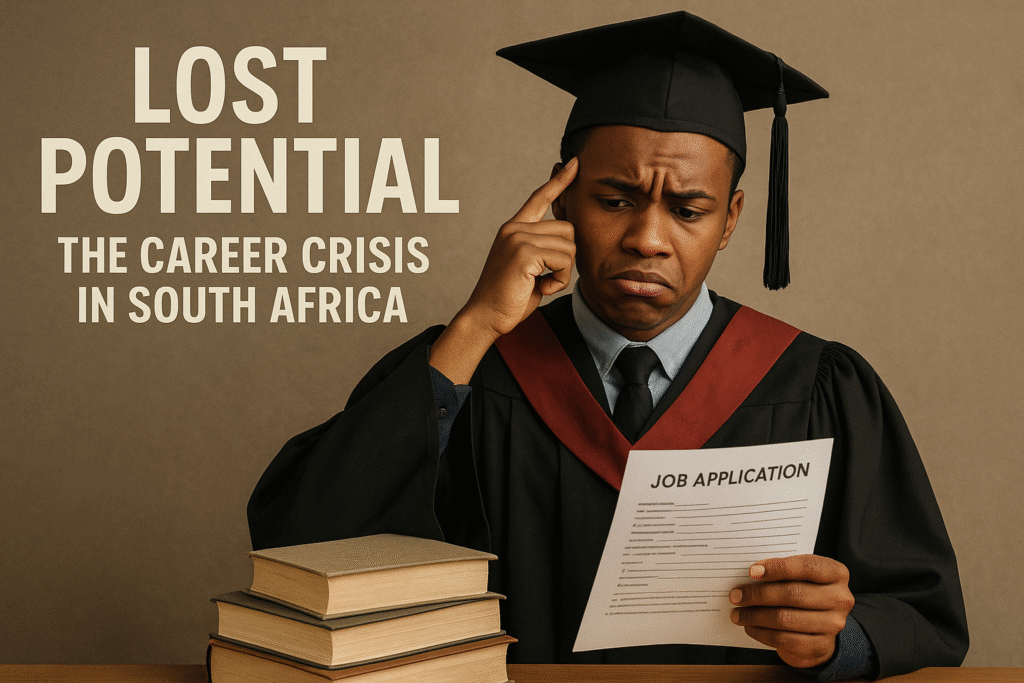
With the rise in unemployment, it’s fair to ask: how many people are jobless simply because they were never exposed to the full range of career paths available to them? Many students drop out of university not because they lack the ability or interest, but because they entered programmes without truly understanding what they wanted to study in the first place. While it’s true that financial limitations are a major barrier, there’s also a serious lack of career awareness. Many people don’t know what career fits their personality, skills, or interests, let alone what options exist beyond the obvious.
As children, we all show early signs of interest, whether it’s drawing, pulling apart toy cars, or even dissecting insects. These curious habits often hint at future careers in fields like design, engineering, or biology. But those interests are rarely nurtured into something real. Sure, interests evolve over time, and career changes are part of life. But what if the high rate of career switches we see today is largely due to people being pressured into making uninformed decisions after high school, choosing paths they never truly connected with?
That’s the conversation we need to have. I’ve faced this myself. I’m a creative person, but for a long time, I didn’t know how to turn that into something concrete. The stress of not knowing what to do builds fast, especially when the expectation is clear: get a job, any job. The problem is, most people only know about a handful of careers, such as teacher, nurse, lawyer, or doctor, because those are the ones they’ve seen or heard about.
Most private schools offer extra-mural activities that help learners explore and develop their interests in meaningful ways. From robotics to art to coding lessons, these programmes actively prepare children for careers they might one day pursue. In contrast, public schools often lack the resources to provide such exposure. That’s why students in private schools are more likely to mention non-traditional careers like software development, graphic design, or game programming. The divide is clear, and it is growing.
With most South African families unable to afford private education, the question becomes urgent. What steps can parents and communities take to help nurture their children’s skills and guide them towards careers that truly align with their interests? Access to information, mentorship, public workshops, online resources, and even free community-led programmes can all play a role. But it starts with awareness, recognising that opportunities exist beyond the textbook definitions of success.
Ask a child in a South African public school what they want to be, and you’ll likely hear one of the traditional answers. That’s not because those jobs are bad. They’re essential. It’s because students aren’t shown the full picture. Globally, there are estimated to be over 12,000 different careers. That number might not be exact, but it gives a sense of the scale. The options are massive. The awareness is not.
We need better career guidance from an early age, real conversations, not just job titles on a poster. We need to connect children’s interests with actual fields they can pursue. We need schools, parents, and communities to help young people see what’s possible so they can make choices based on passion, not pressure.
Because a country full of young people choosing jobs they don’t care about isn’t just an employment issue. It’s a crisis of potential.
Sources
The State of Education in South Africa: Challenges and Prospects
Education in South Africa
9 reasons why students drop out of university in South Africa